
Homeschooling Information and Qualification instructor Beth Rosenzweig began her career in home education with her own children in the 1980s. Feeling traditional primary grade classes were not the best fit for her children, Rosenzweig educated herself on how to successfully teach her own children. She found homeschooling to be very successful for her and her family. Her children not only succeeded, but also continued to accelerate while being taught at home and entered college at early ages.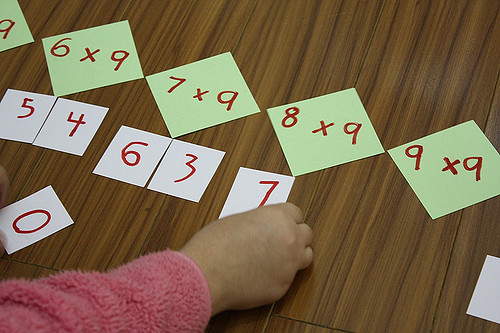
While homeschooling her children, Rosenzweig took an active interest in the governance of homeschooling as a local institution and became an active member of the Board of Washington Homeschool organization. “My certification as a Washington State teacher allowed me to provide annual academic assessments for homeschooled children starting in 1985 and for the past 33 years. The numerous hours I volunteered consulting with and encouraging homeschooling families just naturally lent itself to teaching the homeschool information and qualification classes that began in the early 1990s at local community colleges.”
Parents come to homeschooling for numerous reasons and may choose to explore it at different stages of a child’s development. “Sometimes it is a choice made before a child enters school as a means to continue the ‘teaching’ that began at birth,” she says. “All parents ‘homeschool’ as children are ready to walk, eat, dress, etc. These skills are taught at home and often continue when they are ready to learn letters and numbers. Sometimes the choice to Homeschool is for a limited period of time to help a child having difficulty coping in a traditional classroom, for social, health or academic reasons.”
Rosenzweig also notes some families lead nomadic lifestyles that prevent their children from partaking in a public education. “Families who travel (living half the year in another country or long distance sailing or motoring) or have children who are musical or athletic prodigies (who spend 5 or more hours a day practicing) are attracted to the freedom that homeschooling provides their unique schedules.”
One concern posed by critics of homeschooling is in meeting the child’s need for socialization. Rosenzweig has this response: “Now that we have had a generation of children who have been homeschooled and are adults with families of their own, running businesses, serving in the military and in politics and even teaching school, it seems that the only question that continues to concern anyone is, ‘What about socialization?’ How do I respond? I usually smile and ask, ‘What about it?’ ‘What exactly is your concern?’ ‘What is your definition of ‘socialization’ that would prevent it from happening in families, libraries, museums, parks, grocery stores, restaurants, etc. where homeschoolers spend their time with a wide range of ages of people?”
Rosenzweig says students attending Homeschooling Information and Qualification can look forward to exploring the laws that regulate home-based instruction. “My students will discover what IS (and IS NOT) required for families who homeschool,” she says. “They will discover their own learning style and how that relates to 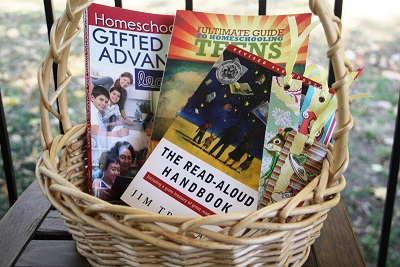 teaching their children whose learning styles may not match their own. Curriculum options will be presented and ways to choose what is appropriate for teaching their children. The class will offer opportunities for question and answer so that the individual concerns of the participants will be addressed in group discussion (or privately, if preferred).”
Rosenzweig believes there are numerous elements that go into creating a successful homeschool environment, all of which start with the child’s individual learning needs. “I think a successful homeschool environment exposes children to opportunities to explore the things they are interested in and gives guidance for learning the skills necessary to (eventually) function productively as an adult.”
There is great deal of information Rosenzweig looks forward to sharing with her students, not the least of which is leaving those seeking homeschooling qualification well prepared. “For those taking the class for information, this fast-paced class will cover topics including; the homeschool law and testing, getting started, learning styles-teaching strategies, organization, teaching basic skills, teaching in the content areas, curriculum options, homeschooling high school students and special needs, and teaching hands-on learners.” She says the class will be like a buffet, where numerous choices are offered. “I encourage the students to take what they want and leave the rest. The parents are the experts on their children (not me) so they need to make these choices for themselves—there is no ‘one-size fits all’”.
Learn more about Homeschooling Information and Qualification.
Photo credit #1: Robert Wilson_cc_2.0
Photo credit #2: Jimmie_cc_2.0
Photo credit #3: Jimmie_cc_2.0